Last updated on July 23rd, 2026 at 04:48 pm
Have you ever received a message that simply says “YW” and wondered what it means? You’re not alone.
Every day, millions of people use short forms while texting because they make conversations quicker and easier.
If you’re new to texting slang or simply want to understand YW meaning in text, this guide will answer every question in a simple and friendly way.
The YW meaning in text is one of the most common internet abbreviations used across messaging apps and social media platforms.
Whether you’re chatting with friends, replying to coworkers, or scrolling through online comments, you’ll likely see this abbreviation sooner or later.
What Does YW Mean in Text? 💬
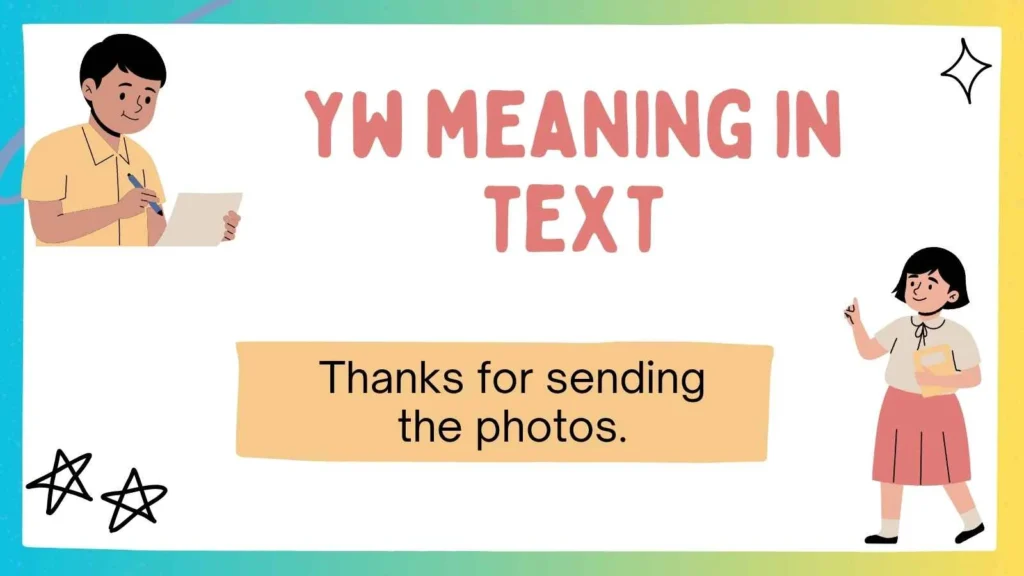
The YW meaning in text is “You’re Welcome.”
People use YW as a quick reply after someone says “Thank you” or “Thanks.” Instead of typing the full phrase, they shorten it to just two letters.
Think of it as the digital version of politely saying,
“You’re welcome!”
It saves time while keeping the conversation friendly.
Quick Answer
| Abbreviation | Meaning | Used After |
|---|---|---|
| YW | You’re Welcome | Someone thanks you |
Simple Conversation Examples
Example 1
Emma: Thanks for helping me with my homework!
Liam: YW! 😊
Example 2
Alex: Thanks for sending the photos.
Mia: YW!
Example 3
Noah: I appreciate your advice.
Olivia: YW. Happy to help!
These examples show that YW works exactly like saying “You’re welcome.”
Why People Use YW
There are several reasons why this abbreviation has become so popular.
- 📱 It saves typing time.
- 😊 It keeps conversations casual.
- ⚡ It makes texting faster.
- 💬 It feels natural in online chats.
- 🌍 It is recognized across many social media platforms.
Because texting has become a part of everyday life, abbreviations like YW help people communicate more efficiently without losing politeness.
Featured Snippet Answer
YW means “You’re Welcome” in text messages and online chats. It is commonly used as a polite response after someone says “Thank you” or “Thanks.”
The Origin of YW in Online Messaging 🌍
The YW meaning in text may seem modern, but its story began many years ago.
Before smartphones existed, people used SMS text messages with limited character counts. Since typing on old mobile phones took more effort, users started shortening common phrases.
Expressions such as:
- LOL
- BRB
- OMG
- TY
- YW
quickly became part of everyday digital communication.
As messaging platforms evolved, these abbreviations continued to spread.
Today, YW appears on:
- 📱 SMS
- 💙 Facebook Messenger
- 📷 Instagram DMs
- 👻 Snapchat
- 🎵 TikTok comments
- 🎮 Gaming chats
- 💼 Workplace messaging apps
Its popularity comes from being both short and polite.
Why It Became Popular
People enjoy conversations that feel quick and effortless.
Instead of typing:
“You’re very welcome!”
they simply type:
“YW!”
The message stays friendly while taking much less time to write.
Evolution of Digital Language
Internet language changes every year.
Many abbreviations disappear over time, but YW remains popular because people will always thank one another.
That makes YW one of the timeless pieces of texting slang.
Interesting Fact 💡
Although new internet slang appears almost daily, YW has stayed relevant because it represents good manners. It reminds people that even short messages can still be polite.
How to Use YW Correctly in Conversations ✍️
Knowing the YW meaning in text is only the first step. Using it naturally is just as important.
Fortunately, it’s very simple.
Whenever someone thanks you, YW is usually an appropriate response.
Basic Formula
Person A:
Thanks!
⬇️
Person B:
YW!
That’s it!
Everyday Examples
Friend
Friend: Thanks for the ride!
You: YW!
Family
Brother: Thanks for dinner.
You: YW 😊
School
Classmate: Thanks for sharing your notes.
You: YW! Hope they help.
Work
Coworker: Thanks for covering my shift.
You: YW. Anytime!
Different Friendly Versions
You don’t always have to send only YW.
You can also write:
- YW 😊
- YW! Glad to help.
- YW ❤️
- YW. Anytime.
- YW! No problem.
- YW! Happy to help.
Adding a few extra words often makes your reply feel warmer and more personal.
Situations Where YW Fits Best
*✅ Text messages
✅ Group chats
*✅ Social media conversations
✅ Online gaming
*✅ Casual work chats
✅ Family messaging
Situations Where You Should Avoid It
Sometimes writing the full phrase “You’re welcome” sounds more professional.
Examples include:
- Business emails
- Job applications
- Customer support responses
- Academic communication
- Formal letters
In these situations, complete words create a more polished impression.
Pro Tip ⭐
If you’re unsure whether a conversation is formal or casual, choosing “You’re welcome” instead of YW is usually the safer option.
YW Meaning Across Different Social Media Platforms 📱
Although the YW meaning in text stays the same almost everywhere, people use it slightly differently depending on the platform.
Here’s how it commonly appears across today’s most popular apps.
| Platform | Meaning | Common Usage |
|---|---|---|
| You’re Welcome | Daily chats | |
| Snapchat | You’re Welcome | Quick replies |
| You’re Welcome | DM conversations | |
| TikTok | You’re Welcome | Comments and replies |
| Facebook Messenger | You’re Welcome | Friends and family chats |
| Discord | You’re Welcome | Gaming communities |
| Telegram | You’re Welcome | Private messaging |
People often reply with:
YW 😊
because conversations are usually relaxed and friendly.
Snapchat
Messages disappear quickly, so short replies like YW are very common.
Example:
Friend: Thanks for the snap!
You: YW!
In direct messages, creators and friends often use YW after someone thanks them for recommendations, photos, or support.
Example:
Follower: Thanks for replying!
Creator: YW ❤️
TikTok
You’ll also notice YW in comment sections.
Example:
Comment:
“Thanks for the tutorial!”
Reply:
YW! Glad it helped!
Discord
Gamers frequently use abbreviations while chatting during matches.
Instead of typing long responses, many simply write:
YW
before returning to the game.
Does the Meaning Ever Change?
In most conversations, YW almost always means “You’re Welcome.”
However, like many abbreviations, context matters. In very specific communities or niche discussions, the letters YW may stand for something else, but in everyday texting and social media, people almost always understand it as “You’re Welcome.”
That consistency is one reason the abbreviation has remained popular for years.
YW vs Other Common Texting Abbreviations 🔤
Now that you understand the YW meaning in text, it’s helpful to compare it with other popular texting abbreviations. Many people confuse these short forms because they often appear in the same conversations.
The table below makes it easy to understand the differences.
| Abbreviation | Meaning | When to Use It |
|---|---|---|
| YW | You’re Welcome | After someone says “Thanks” |
| TY | Thank You | To express gratitude |
| NP | No Problem | To reassure someone after helping |
| NP | No Worries | Casual alternative to “You’re welcome” |
| THX | Thanks | Informal way to thank someone |
| TIA | Thanks in Advance | Before receiving help |
| IDK | I Don’t Know | When you’re unsure |
| IMO | In My Opinion | To share a personal opinion |
| BRB | Be Right Back | When leaving a chat briefly |
| LOL | Laughing Out Loud | To show amusement |
How YW Differs from TY
People often use these abbreviations together, but they have opposite purposes.
TY starts the exchange.
YW finishes it politely.
Example
Sarah: TY for your help!
Jake: YW! 😊
YW vs NP
Both expressions respond to a thank-you, but they create slightly different feelings.
YW sounds polite and traditional.
NP sounds more relaxed and reassuring.
Example
Friend: Thanks for waiting.
You: YW!
or
You: NP!
Both are correct, but they have different tones.
Which One Should You Choose?
Choose YW when you want to sound:
- 😊 Friendly
- 🤝 Polite
- 💬 Respectful
- 👍 Positive
Choose NP when you want to emphasize that helping wasn’t an inconvenience.
Quick Tip 💡
If you’re ever unsure which abbreviation to use, YW is the safest choice because almost everyone understands it.
Real-Life Examples of YW in Text Messages 💬
The best way to remember the YW meaning in text is by seeing it in real conversations. Below are examples that reflect everyday situations.
Example 1: Friends
Emily: Thanks for picking me up!
Lucas: YW! 🚗
Example 2: School
Student: Thanks for explaining the math problem.
Classmate: YW! Good luck on the test.
Example 3: Office Chat
Coworker: Thanks for sending the report.
You: YW. Let me know if you need anything else.
Example 4: Family
Mom: Thanks for helping with dinner.
Son: YW ❤️
Example 5: Gaming
Player 1: Thanks for the extra health pack!
Player 2: YW 😄
Example 6: Social Media
Follower: Thanks for your recommendation!
Creator: YW! I’m happy you enjoyed it.
Example 7: Online Shopping
Customer: Thanks for answering my question.
Seller: YW! Have a wonderful day.
Example 8: Group Chat
Friend: Thanks everyone for the birthday wishes!
You: YW! Hope you had an amazing day. 🎉
Why These Examples Matter
Real conversations help you understand not only what YW means, but also how naturally it fits into everyday communication.
Notice that the abbreviation always follows a message of gratitude. That’s the easiest way to remember when to use it.
Mini Conversation Table
| Someone Says | You Can Reply |
|---|---|
| Thanks! | YW! |
| Thank you so much! | YW 😊 |
| I appreciate it! | YW. Happy to help! |
| Thanks for your support. | YW! Anytime. |
| Thank you for everything. | YW ❤️ |
Using these simple responses keeps your conversations polite without requiring long messages.
When You Should and Shouldn’t Use YW ⚠️
Although YW meaning in text is simple, choosing the right situation is important. Context can change how your message is received.
When It’s Perfect to Use YW
Use YW in casual conversations such as:
- 📱 Text messages
- 👥 Group chats
- 👨👩👧👦 Family conversations
- 👯 Friend chats
- 🎮 Online gaming
- 📷 Social media messages
- 💬 Instant messaging apps
These settings are informal, making abbreviations feel natural.
When You Should Avoid It
There are situations where writing only YW may seem too casual.
Avoid using it in:
- 📧 Professional emails
- 🎓 Academic assignments
- 💼 Business proposals
- 📄 Formal letters
- 🤝 Communication with important clients
- 🏢 Official workplace announcements
Instead, write the complete phrase:
“You’re welcome.”
or
“You’re very welcome.”
These versions show greater professionalism.
Formal vs Casual Comparison
| Situation | Best Choice |
|---|---|
| Texting a friend | YW |
| Family group chat | YW |
| Instagram DM | YW |
| Snapchat | YW |
| Work email | You’re welcome |
| Customer support | You’re welcome |
| College application | You’re welcome |
| Business communication | You’re welcome |
Can Using YW Be Rude?
Not usually.
However, it can appear a little cold if:
- You reply with only “YW” in a serious conversation.
- The other person expects a warmer response.
- You’re communicating in a formal setting.
Adding a few extra words often makes a big difference.
Instead of:
YW
Try:
- YW! Happy to help.
- YW 😊
- YW! Anytime.
- YW! Glad I could help.
These responses feel much friendlier.
Expert Tip ⭐
Good communication isn’t just about saving time. It’s also about matching the tone of the conversation. A short reply works well with close friends, while a complete sentence often works better in professional settings.
Common Mistakes People Make with YW 🚫
Even though the YW meaning in text is straightforward, people sometimes misunderstand or misuse it. Avoiding these common mistakes will help you communicate more clearly.
Mistake 1: Using YW Before Someone Says Thanks
Incorrect:
You: YW!
Friend: I didn’t thank you yet.
The abbreviation should come after someone expresses gratitude.
Mistake 2: Using YW in Formal Emails
Imagine sending this to your manager:
“YW.”
While it isn’t offensive, it may seem too casual.
A better response would be:
“You’re welcome. I’m glad I could help.”
Mistake 3: Assuming Everyone Knows Internet Slang
Not everyone is familiar with texting abbreviations.
Older family members, new internet users, or international readers may not recognize YW immediately.
If you’re unsure, write the full phrase instead.
Mistake 4: Forgetting Tone
Text messages don’t include facial expressions or voice.
Adding a friendly emoji or a few extra words helps avoid misunderstandings.
Instead of:
YW
Try:
YW 😊
or
YW! Anytime!
Mistake 5: Confusing YW with Other Abbreviations
Some beginners accidentally mix up abbreviations such as:
- TY
- YW
- NP
- TIA
Remember this simple pattern:
TY → Someone thanks you
⬇️
YW → You respond politely
Easy Memory Trick 🧠
Think of a polite conversation like a tennis match.
🎾 First hit:
Thank you!
🎾 Return:
You’re welcome!
In texting language, that becomes:
TY → YW
It’s quick, easy, and memorable.
By avoiding these common mistakes, you’ll use YW naturally and confidently in almost any casual conversation.
Is YW Always Appropriate? Understanding Tone and Context 😊
Although the YW meaning in text is almost always “You’re Welcome,” the way people interpret it can depend on the conversation. Text messages don’t include facial expressions or voice, so even a simple abbreviation can feel different based on the situation.
The key is to match your reply to the tone of the conversation.
Casual Conversations
In everyday chats with friends or family, YW feels natural and friendly.
Example
Friend: Thanks for sharing the playlist!
You: YW! 🎵
Because the conversation is relaxed, the abbreviation fits perfectly.
Professional Conversations
In work-related messages, YW may still be acceptable if your workplace has an informal culture.
However, if you’re speaking with a client, manager, or someone you don’t know well, it’s usually better to write the complete phrase.
Instead of:
YW
Try:
- You’re welcome.
- You’re very welcome.
- Happy to help!
- My pleasure.
These replies sound more polished and professional.
Emotional Conversations
Sometimes, people say “thank you” after receiving emotional support.
For example:
Friend: Thank you for being there when I needed someone.
Replying with only YW may sound too brief.
A warmer response would be:
- You’re always welcome.
- I’m glad I could help.
- Anytime. I’m here for you. ❤️
Adding kindness helps strengthen the conversation.
Tone Comparison Table
| Situation | Better Reply |
|---|---|
| Casual text | YW 😊 |
| Family chat | YW! |
| Gaming chat | YW |
| Work email | You’re welcome. |
| Customer service | You’re welcome! Happy to help. |
| Emotional conversation | I’m glad I could help. |
Remember This Rule ⭐
The shorter the conversation, the more natural YW feels.
The more personal or professional the conversation becomes, the better it is to use complete words.
YW Meaning in Text From a Guy
- 🧑 Most guys use YW as a quick way to say You’re Welcome after helping you
- 😊 It often shows good manners without making the conversation feel formal
- 💬 A short YW can simply mean he has nothing more to add
- 👍 Some guys use YW to keep the chat friendly and relaxed
- ❤️ If he adds emojis with YW, it may sound warmer and more personal
- 🤝 YW usually signals appreciation after you say thanks
- 📱 Many guys prefer YW because it saves time while texting
- 😄 A playful YW can keep the conversation light and enjoyable
- 🔍 Always look at his previous messages to understand the real tone
- 💡 YW alone does not automatically show romantic interest
- 🚀 Fast replies with YW often mean he is actively engaged in the chat
- ⭐ Context matters more than the abbreviation itself every single time
YW Meaning in Text From a Girl
- 👩 YW usually means You’re Welcome after receiving a thank you
- 😊 Many girls use YW to sound polite and kind in casual chats
- 💕 A cheerful emoji can make YW feel more caring and friendly
- 🌸 It often keeps the conversation positive without adding extra words
- 📲 YW is commonly used in everyday texting with friends and family
- 😄 Some girls use YW to reply quickly during busy moments
- 💬 A simple YW does not always carry hidden meaning
- ✨ The overall conversation helps reveal the real intention behind it
- 🤗 Friendly follow-up messages can make YW feel more welcoming
- 💡 YW is usually a sign of good manners rather than flirtation
- 🎯 Watch for emojis and message style to better understand the tone
- 🌟 Every conversation is unique, so avoid making quick assumptions
Best YW Meaning on Snapchat
- 👻 On Snapchat, YW almost always stands for You’re Welcome
- ⚡ It is a fast reply after someone thanks you in chat
- 💬 Friends use YW to keep conversations short and casual
- 😊 YW fits perfectly with Snapchat’s quick messaging style
- 📱 You may also see YW in private chats and group conversations
- 🎉 Many users pair YW with emojis to sound more expressive
- 🔥 YW helps keep streak chats moving without long replies
- 🤝 It is one of the most common texting abbreviations on Snapchat
- 💡 The meaning rarely changes unless the conversation clearly suggests otherwise
- 🌍 YW is widely understood by Snapchat users around the world
- 🚀 Learning common Snapchat abbreviations makes chatting much easier
- ⭐ Reading the full conversation gives the most accurate meaning every time
FAQs:
Below are some of the most common questions people ask about the YW meaning in text.
Q1. What does YW mean in text messages?
YW stands for “You’re Welcome.” It is a polite reply used after someone says “Thanks” or “Thank you.”
Q2. Is YW considered rude?
No. In casual conversations, YW is generally seen as friendly and respectful. However, in formal or professional settings, writing “You’re welcome” in full is usually a better choice.
Q3. What is the difference between YW and NP?
Both can be used after someone thanks you.
- YW means “You’re Welcome.”
- NP means “No Problem.”
Both are polite, but YW sounds slightly more traditional, while NP feels more casual.
Q4. Can I use YW on Snapchat, Instagram, or TikTok?
Yes. YW is widely used across social media platforms, including Snapchat, Instagram, TikTok, WhatsApp, Facebook Messenger, Discord, and other messaging apps.
Q5. Should I use YW in business emails?
It’s usually better not to. In professional communication, writing “You’re welcome” or “My pleasure” creates a more polished and respectful impression.
Final Thoughts:
Understanding the YW meaning in text makes online conversations much easier. While the abbreviation contains only two letters, it plays an important role in polite digital communication.
In almost every casual conversation, YW simply means “You’re Welcome.” It’s a quick, friendly, and widely recognized way to respond when someone thanks you.
Whether you’re chatting with friends, messaging family, replying on social media, or talking in a gaming community, using YW helps keep conversations smooth and positive.
Choosing the right response based on the situation shows both good communication skills and digital etiquette.
As texting language continues to evolve, abbreviations like YW remain popular because they’re simple, polite, and easy to understand.
Once you know when and how to use them, you’ll communicate with greater confidence in any online conversation.

I am a dedicated SEO content writer and language enthusiast with a passion for making modern slang, text abbreviations, and internet terms easy to understand. I carefully research every topic using trusted sources and real-world usage to ensure each explanation is accurate, clear, and up to date. My goal is to help readers quickly understand confusing words, texting acronyms, and online expressions through simple English, practical examples, and easy-to-follow guides. Every article is written with a focus on quality, trustworthiness, and a great reader experience, so you can find reliable answers with confidence.