Have you ever received a message that simply said “TY” and wondered what it meant? You’re not alone.
Every day, millions of people use short text abbreviations to communicate faster. Among the most popular is TY, a tiny expression that carries a big message of appreciation.
If you’ve searched for ty meaning in text, you’re in the right place.
Whether you’re texting friends, chatting on Snapchat, scrolling through Instagram, replying on WhatsApp, or gaming online, you’ll likely come across this common abbreviation.
The good news is that TY is simple to understand once you know its meaning. However, there are also different situations where people use it differently.
Knowing when and how to use it can help you sound more natural and confident in online conversations.
TY Meaning in Text 📱
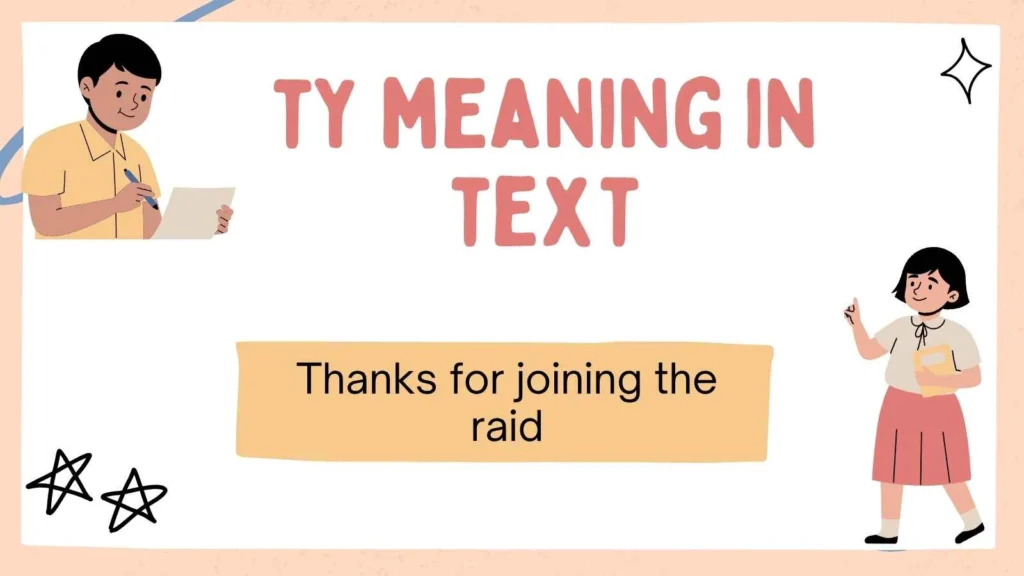
The TY meaning in text is simply “Thank You.”
People use TY as a quick way to express gratitude without typing the full words. It saves time while still showing appreciation.
Quick Answer
| Abbreviation | Meaning | Tone |
|---|---|---|
| TY | Thank You | Friendly 😊 |
| TY! | Thank You! | Happy 😄 |
| TYSM | Thank You So Much | Very Appreciative ❤️ |
| TYVM | Thank You Very Much | Polite 🙌 |
Whenever someone helps you, gives you information, sends a gift, or does something thoughtful, replying with TY is perfectly acceptable in casual conversations.
Example
Friend:
“I sent you the notes.”
You:
“TY!”
It immediately tells the other person that you appreciate their help.
What Does TY Mean in Text Messages? 💬
In everyday texting, TY almost always means Thank You.
It’s one of the shortest and most widely recognized abbreviations in digital communication.
Instead of typing:
Thank you.
People simply write:
TY
This abbreviation is common because modern messaging is designed to be quick and effortless.
Examples
Example 1
Person A:
“I’ll pick you up at 7.”
Person B:
“TY!”
Example 2
Friend:
“Here’s the homework.”
You:
“TY 😊”
Example 3
Coworker:
“Meeting moved to Monday.”
Reply:
“TY for letting me know.”
Notice that TY works naturally in both personal and professional casual conversations.
Origin of TY in Online Communication 🌍
Like many internet abbreviations, TY became popular because people wanted faster communication.
Years ago, texting had character limits. Mobile phones also used numeric keypads, making typing slower than today.
Instead of typing:
Thank You
people shortened it to:
TY
Over time, this abbreviation spread across:
- 📱 SMS texting
- 💬 Instant messaging
- 🎮 Online gaming
- 👻 Snapchat
- 🎵 TikTok
- 💼 Workplace chats
- 💻 Online forums
Today, TY is recognized almost everywhere English is spoken online.
Its popularity continues because it’s short, polite, and universally understood.
Why Do People Use TY Instead of Thank You? 🤔
There are many reasons why people prefer using TY.
It Saves Time ⏰
Typing only two letters is much faster than typing nine.
Instead of:
Thank you
People write:
TY
It Feels Casual 😊
Friends often keep conversations relaxed.
Using TY makes chats feel natural without sounding overly formal.
It Keeps Conversations Moving 🚀
Fast conversations don’t need long replies.
Example:
Friend:
“Got your package.”
Reply:
“TY!”
The conversation continues smoothly.
It’s Universally Recognized 🌎
Almost every regular internet user understands TY.
That’s why it’s become one of the most common texting abbreviations.
Where Is TY Commonly Used? 📲
The abbreviation appears on nearly every digital platform.
Here are the most common places you’ll see it.
| Platform | Is TY Common? |
|---|---|
| Text Messages | ✅ Very Common |
| ✅ Yes | |
| Messenger | ✅ Yes |
| ✅ Very Common | |
| Snapchat | ✅ Very Common |
| TikTok Comments | ✅ Yes |
| Discord | ✅ Yes |
| Gaming Chats | ✅ Very Common |
| ✅ Yes | |
| Email (Casual) | ⚠ Sometimes |
| Formal Email | ❌ Rare |
Although TY works well in casual chats, writing Thank You is usually better in formal emails.
TY Meaning on Snapchat 👻
Snapchat conversations move very quickly.
People often respond with short abbreviations instead of full sentences.
That’s why TY appears frequently.
Example
Friend:
“Your streak is safe!”
Reply:
TY 😂
Another example:
Friend:
“Loved your Snap!”
You:
TY ❤️
Since Snapchat encourages casual communication, TY fits perfectly.
TY Meaning on Instagram 📸
Instagram users often reply with TY in:
- Comments
- Direct Messages (DMs)
- Story replies
- Reel comments
Example
Follower:
“Amazing photo!”
Creator:
“TY ❤️”
Friend:
“Happy Birthday!”
Reply:
“TY so much! 😊”
Instagram conversations are usually friendly and relaxed, making TY an excellent choice.
TY Meaning on WhatsApp 💚
WhatsApp is one of the world’s most popular messaging apps.
You’ll frequently see TY between:
- Friends
- Family
- Classmates
- Coworkers
- Study groups
Example
Mom:
“Dinner is ready.”
Reply:
“TY 😊”
Teacher:
“Assignment received.”
Student:
“TY!”
Friend:
“I booked the tickets.”
Reply:
“TY! Can’t wait!”
The abbreviation helps keep conversations short while still expressing gratitude.
TY Meaning in Online Gaming 🎮
Gaming requires quick communication.
Players don’t have time to type long sentences during matches.
Instead, they often use abbreviations.
TY is one of the most common.
Example
Teammate:
“I revived you.”
Reply:
“TY!”
Player:
“Dropped extra ammo.”
Reply:
“TY ❤️”
Guild member:
“Thanks for joining the raid.”
Response:
“TY everyone!”
Gaming communities appreciate quick replies, making TY incredibly popular.
Different Ways People Write TY ✨
Although TY always means Thank You, people often add extra letters or emojis to express stronger emotions.
Here are some of the most common variations.
| Abbreviation | Meaning | Emotion |
|---|---|---|
| TY | Thank You | Simple 😊 |
| TY! | Thank You! | Excited 😄 |
| TYSM | Thank You So Much | Very Grateful ❤️ |
| TYVM | Thank You Very Much | Polite 🙌 |
| TY ❤️ | Thank You | Warm & Friendly |
| TY 😊 | Thank You | Cheerful |
| TY 😂 | Funny Thanks | Playful |
| TY🙏 | Thank You | Respectful |
These variations let you match your tone to the situation without typing a full sentence.
Real-Life Examples of TY in Conversations 💬
Seeing TY used in everyday chats makes it easier to understand when it’s appropriate. Here are a few realistic conversations.
Example 1: Friends
Alex: I saved you a seat.
Emma: TY! You’re the best. 😊
Example 2: Family
Dad: I transferred the money.
Son: TY Dad!
Example 3: School
Student: Can you send today’s notes?
Friend: Sure, just sent them.
Student: TYSM!
Example 4: Work Chat
Manager: Great job on today’s presentation.
Employee: TY! I appreciate it.
Example 5: Shopping
Seller: Your order has been shipped.
Customer: TY! Looking forward to receiving it.
These examples show that TY is flexible, friendly, and suitable for many casual situations.
When Should You Use TY? ✅
Knowing the ty meaning in text is only the first step. Understanding when to use it helps you communicate naturally and respectfully.
Here are the most common situations where TY fits perfectly.
✔️ When Someone Helps You
If someone does you a favor, a simple TY shows appreciation.
Example:
Friend: “I fixed your laptop.”
You: “TY! I really appreciate it.”
✔️ When Someone Gives You Information
Whether it’s directions, advice, or an update, TY is a polite response.
Example:
Coworker: “The meeting starts at 3 PM.”
Reply: “TY for the update!”
✔️ After Receiving a Gift 🎁
Receiving a gift, even a small one, deserves gratitude.
Example:
“TY! The gift is amazing!”
✔️ During Casual Conversations
TY is common between friends and family.
Example:
“TY! See you tomorrow.”*
✔️ In Online Communities
People often thank others for answering questions or sharing useful tips.
Example:
“TY for explaining that!”*
When Should You Avoid Using TY? 🚫
Although TY is popular, there are situations where writing “Thank You” is a better choice.
Formal Business Emails
Instead of:
TY for your assistance.
Write:
Thank you for your assistance.
It appears more professional.
Job Applications
Recruiters usually expect complete sentences.
Better example:
“Thank you for considering my application.”
Academic Writing
Assignments and reports should avoid texting abbreviations.
Always use the complete phrase.
Official Letters
Formal communication should sound respectful and polished.
Write Thank You instead of TY.
Speaking to Someone You Don’t Know Well
If you’re unsure about the relationship, the full phrase is often safer.
Common TY Variations and Related Text Abbreviations ✨
The internet is full of abbreviations. If you understand TY, you’ll probably recognize many of these too.
| Abbreviation | Meaning |
|---|---|
| TY | Thank You |
| TYSM | Thank You So Much |
| TYVM | Thank You Very Much |
| THX | Thanks |
| TX | Thanks |
| TKS | Thanks |
| NP | No Problem |
| YW | You’re Welcome |
| ILY | I Love You |
| BRB | Be Right Back |
| LOL | Laugh Out Loud |
| OMG | Oh My God |
| IDK | I Don’t Know |
| IMO | In My Opinion |
| FYI | For Your Information |
Learning these abbreviations makes online conversations much easier to understand.
TY vs Thanks vs Thank You: What’s the Difference? 🤔
Although they all express gratitude, they aren’t always used in the same way.
| Expression | Best For | Tone |
|---|---|---|
| TY | Texts, chats, gaming | Casual 😊 |
| Thanks | Everyday conversation | Friendly 🙂 |
| Thank You | Formal and personal situations | Polite 🤝 |
TY
- Fast
- Informal
- Perfect for messaging
Thanks
- Slightly warmer
- Common in speech and text
Thank You
- Most respectful
- Suitable for work, school, and professional communication
Choosing the right version depends on your audience and the situation.
Common Mistakes People Make with TY ⚠️
Even though TY is simple, people sometimes use it incorrectly.
❌ Using TY in Formal Emails
Professional communication usually requires the full phrase.
❌ Assuming TY Has Multiple Meanings
In most conversations, TY almost always means “Thank You.”
Context rarely changes its meaning.
❌ Overusing TY
Repeating TY in every message can feel robotic.
Instead, mix it up with phrases like:
- Thanks!
- Many thanks!
- I appreciate it!
- Thank you so much!
- You’re amazing—thank you!
❌ Forgetting Tone
Adding an emoji can make your message feel warmer.
Examples:
- TY 😊
- TY ❤️
- TY🙏
Interesting Facts About TY 🌟
Here are a few fun facts about this popular abbreviation.
- 📱 TY is one of the shortest ways to express gratitude online.
- 🌍 It is recognized by English speakers around the world.
- 🎮 Gamers use TY frequently because every second counts.
- 💬 Social media users often combine TY with emojis.
- 😊 TY helps keep conversations friendly without being too formal.
- 📈 The popularity of TY has grown alongside instant messaging and mobile apps.
- ❤️ Despite being only two letters, TY carries genuine appreciation.
“A simple thank you can brighten someone’s day—even when it’s written as TY.”
FAQs:
What does TY mean in text?
TY means “Thank You.” It is a popular abbreviation used in text messages, social media, online gaming, and chat apps to express appreciation quickly.
Is TY rude or polite?
No. TY is generally considered polite in casual conversations. However, in formal emails or professional communication, writing “Thank You” in full is a better choice.
What is the difference between TY and TYSM?
- TY means Thank You.
- TYSM means Thank You So Much, showing stronger gratitude and appreciation.
Can I use TY in professional messages?
It depends on the situation. TY may be acceptable in informal workplace chats with colleagues, but for formal emails, client communication, or official documents, it’s best to write “Thank You” in full.
Is TY used on Snapchat, Instagram, and WhatsApp?
Yes. TY is commonly used on Snapchat, Instagram, WhatsApp, Messenger, Discord, TikTok, and many other messaging platforms. It is one of the most widely recognized texting abbreviations.
Final Thoughts:
Understanding the ty meaning in text makes online conversations easier and more enjoyable.
While the abbreviation is short, it represents one of the most meaningful phrases in any language: “Thank You.”
Whether you’re chatting with friends, replying on social media, sending a quick message on WhatsApp, or playing online games, TY offers a simple and friendly way to show appreciation.
It’s fast, widely understood, and perfect for casual communication.
At the same time, remember that context matters. In professional emails, academic writing, or formal situations, using the full phrase “Thank You” creates a stronger and more respectful impression.
By knowing where and when to use TY, you can communicate with confidence and keep your digital conversations warm, polite, and natural.

I am a dedicated SEO content writer and language enthusiast with a passion for making modern slang, text abbreviations, and internet terms easy to understand. I carefully research every topic using trusted sources and real-world usage to ensure each explanation is accurate, clear, and up to date. My goal is to help readers quickly understand confusing words, texting acronyms, and online expressions through simple English, practical examples, and easy-to-follow guides. Every article is written with a focus on quality, trustworthiness, and a great reader experience, so you can find reliable answers with confidence.