Have you ever received a message saying “SFS?” and wondered what it actually means? You’re definitely not alone.
Internet slang changes quickly, and new abbreviations appear almost every day. Some disappear after a few months, while others become part of everyday online conversations.
The SFS meaning in text can be confusing because it doesn’t always have just one definition. Its meaning often depends on where you’re chatting and who you’re talking to.
On platforms like Snapchat and Instagram, SFS usually has a completely different purpose than it does in a casual text message.
You’ll also find plenty of real-life examples to help you recognize it instantly. 🚀
What Does SFS Mean in Text? 🤔
The SFS meaning in text most commonly stands for “Shoutout for Shoutout.”
This phrase is especially popular on Instagram, Snapchat, TikTok, and other social media platforms, where users help each other gain more followers or increase visibility.
Here’s how it works:
- One user gives another person a public shoutout.
- The other person returns the favor.
- Both accounts receive more exposure.
- Everyone benefits from sharing audiences.
In simple words, SFS is an agreement to promote each other.
Quick Definition Table
| Term | Meaning |
|---|---|
| SFS | Shoutout for Shoutout |
| Category | Internet Slang |
| Used On | Instagram, Snapchat, TikTok, Facebook, X, WhatsApp |
| Purpose | Mutual promotion |
| Tone | Friendly and casual |
| Popular Among | Influencers, creators, brands, friends |
Simple Example
Person A:
“Anyone interested in SFS today?”
Person B:
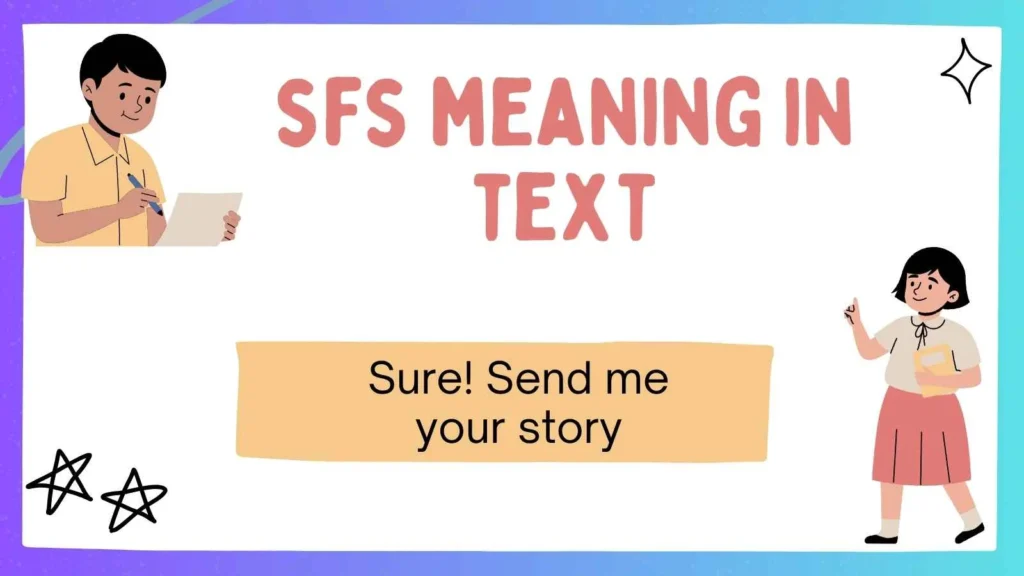
“Sure! Send me your story.”
In this conversation, both users agree to promote each other’s profiles.
Featured Snippet Answer 📌
SFS meaning in text usually stands for “Shoutout for Shoutout.” It is commonly used on social media when two users agree to promote each other’s accounts by sharing posts or stories to help increase followers and engagement.
The Origin of SFS in Online Communication 🌍
Like many internet abbreviations, SFS became popular as social media grew. Users wanted a faster way to type common phrases, especially when communicating with large audiences.
Instead of repeatedly writing:
“Can we give each other a shoutout?”
people simply started typing:
SFS
The abbreviation quickly spread across different platforms because it was short, memorable, and easy to understand.
Why Did It Become Popular?
Several reasons explain its popularity:
- ✅ Saves time while messaging.
- ✅ Easy to remember.
- ✅ Fits character limits.
- ✅ Helps creators grow faster.
- ✅ Encourages community support.
- ✅ Creates networking opportunities.
As influencer marketing became more common, SFS also became a useful tool for small creators looking to expand their reach without spending money on advertising.
How SFS Evolved
Originally, SFS mainly referred to exchanging profile promotions.
Today, it can also involve:
- Story shares
- Reel shares
- Post promotions
- Business recommendations
- Creator collaborations
- Community support campaigns
Although the core idea remains the same, the ways people use SFS continue to evolve with changing social media trends.
Different Meanings of SFS in Text Messages 💬
Although “Shoutout for Shoutout” is the most common definition, SFS can have other meanings depending on the conversation.
Understanding the context is very important before assuming what someone means.
1. Shoutout for Shoutout (Most Common)
This is the meaning you’ll encounter most often.
Example:
“Let’s do SFS this afternoon.”
Meaning:
Let’s promote each other’s accounts.
2. Snap for Snap
Some Snapchat users interpret SFS as “Snap for Snap.”
In this case, users simply exchange snaps rather than profile promotions.
Example:
“SFS tonight?”
Meaning:
Want to exchange snaps?
3. Spam for Spam
Some online communities use SFS to mean “Spam for Spam.”
This involves:
- liking many posts
- commenting
- boosting engagement
- increasing visibility
Example:
“Need engagement? SFS?”
Meaning:
Let’s interact with each other’s posts.
Meaning Comparison Table
| Meaning | Common Platform | Purpose |
|---|---|---|
| Shoutout for Shoutout | Grow followers | |
| Snap for Snap | Snapchat | Exchange snaps |
| Spam for Spam | Increase engagement |
The surrounding conversation almost always reveals which meaning is intended.
SFS Meaning on Snapchat 👻
Snapchat users frequently use SFS, but the meaning may vary slightly.
On Snapchat, it commonly means:
- Shoutout for Shoutout
- Snap for Snap
Example 1
Friend:
“SFS?”
You:
“Sure!”
Meaning:
Both users agree to promote each other’s Snapchat accounts.
Example 2
Friend:
“Anyone doing SFS tonight?”
Meaning:
The user wants to exchange story promotions or snaps.
Why Snapchat Users Like SFS
People use SFS because it helps:
- 📈 Gain new friends
- 👥 Build an audience
- ❤️ Increase story views
- 🔥 Improve engagement
- 🎯 Discover new creators
Since Snapchat relies heavily on personal connections, SFS remains a popular way to reach new audiences without paid promotion.
SFS Meaning on Instagram 📸
Instagram is where SFS became especially popular.
Content creators, influencers, photographers, artists, and small businesses regularly use it to increase visibility.
Typical examples include:
- “SFS anyone?”
- “Doing SFS today.”
- “DM for SFS.”
- “Story SFS available.”
How Instagram SFS Works
The process is simple:
- Two users agree to collaborate.
- Both share each other’s account.
- Followers see the recommendation.
- Interested people visit the profile.
- New followers may join.
Example Conversation
Creator A:
“Would you like to do SFS?”
Creator B:
“Absolutely! Send me your best photo.”
Now both accounts receive additional exposure.
Benefits of Instagram SFS
- 🌟 More profile visits
- 📈 Higher follower growth
- ❤️ Better engagement
- 🤝 Networking opportunities
- 🚀 Brand awareness
- 📢 Free promotion
For many small creators, SFS is one of the easiest ways to connect with similar audiences while building supportive online relationships.
How to Use SFS Correctly in Conversations 💡
Understanding the SFS meaning in text is only part of the picture. Knowing when and how to use it naturally makes your conversations smoother and more effective.
Here are a few common situations where SFS fits perfectly:
When You’re Looking for Mutual Promotion
If you’re trying to grow your social media account, you can simply ask:
- “Anyone interested in SFS today?”
- “DM me for SFS.”
- “Looking for SFS partners.”
- “Let’s do an SFS this evening.”
These phrases clearly show that you’re inviting others to exchange shoutouts.
When Someone Asks You for SFS
You don’t have to agree every time. A polite response works best.
You can reply with:
- “Sure, let’s do it!”
- “Sounds good!”
- “Maybe next time.”
- “Thanks for asking!”
- “I’m not doing SFS today.”
Being respectful helps build positive online relationships, even if you decline.
Best Practices for Using SFS
To get the best results:
- ✅ Use SFS with accounts that share similar interests.
- ✅ Keep your promotions genuine.
- ✅ Avoid sending repeated SFS requests to strangers.
- ✅ Make sure the collaboration benefits both sides.
- ✅ Always follow through if you agree to exchange shoutouts.
Using SFS thoughtfully creates trust and encourages long-term connections instead of one-time interactions.
Common Examples of SFS in Real-Life Conversations 💬
Learning through examples is one of the easiest ways to understand the SFS meaning in text. Below are different situations where people naturally use this abbreviation.
Example 1: Instagram Story
Alex: “Doing SFS today! DM me if you’re interested.”
Jordan: “I’m in! I’ll post your story after lunch.”
Meaning: Both users agree to promote each other’s Instagram accounts.
Example 2: Snapchat Chat
Emma: “SFS tonight?”
Liam: “Sure! Send me your username.”
Meaning: They plan to exchange snaps or give each other shoutouts.
Example 3: Small Business Promotion
Coffee Shop: “Looking for local cafés to do SFS.”
Bakery: “Let’s collaborate!”
Meaning: Both businesses help each other reach more local customers.
Example 4: Creator Collaboration
Creator A: “Would you like to do SFS this weekend?”
Creator B: “Absolutely! I’ll share your latest Reel.”
Meaning: Both creators support each other’s content.
Example 5: Friend Group
Friend 1: “Can everyone do SFS for my new page?”
Friend 2: “Of course!”
Meaning: Friends help promote a newly created account.
Quick Example Table
| Message | Meaning |
|---|---|
| SFS? | Want to exchange shoutouts? |
| DM for SFS | Send me a message for collaboration |
| Story SFS | Let’s promote each other in Stories |
| Anyone doing SFS? | Looking for promotion partners |
| SFS today? | Interested in exchanging shoutouts today? |
These examples show that SFS meaning in text usually relates to cooperation and mutual support rather than competition.
When Should You Use SFS? ⏰
Although SFS is easy to use, timing also matters.
Here are some ideal situations.
You Have a New Account
If you’ve recently created:
- a business page
- a photography profile
- a fitness account
- a travel page
- a gaming channel
SFS can help people discover your content.
You’re Launching Something New
Many creators use SFS when announcing:
- New products
- New videos
- Online stores
- Podcasts
- Blogs
- Events
The extra exposure often leads to more visitors.
You Share Similar Audiences
SFS works best when both accounts create related content.
Examples include:
- Two food bloggers
- Two fitness coaches
- Two artists
- Two pet pages
- Two travel creators
This makes the promotion more useful for followers.
You Want to Build Relationships
SFS isn’t only about followers.
It also helps you:
- 🤝 Meet creators
- 💬 Start conversations
- 🌟 Build trust
- 📢 Support communities
- ❤️ Encourage engagement
Long-term relationships are usually more valuable than quick follower gains.
Mistakes to Avoid When Using SFS ⚠️
Many beginners misunderstand how SFS should be used.
Avoid these common mistakes.
1. Asking Everyone
Sending hundreds of SFS requests looks spammy.
Instead, contact people whose content matches yours.
2. Ignoring Your Promise
If someone shares your account, remember to return the favor.
Breaking your promise can damage your reputation.
3. Choosing Unrelated Accounts
A travel blogger and a car repair shop probably won’t benefit much from SFS.
Choose partners with similar audiences.
4. Prioritizing Numbers Over Quality
Thousands of random followers aren’t as valuable as an engaged community.
Focus on meaningful connections.
5. Using SFS Too Often
Posting “SFS” every day may annoy followers.
Balance promotional posts with useful and entertaining content.
Quick Checklist ✅
- ✔️ Choose relevant accounts.
- ✔️ Keep collaborations genuine.
- ✔️ Deliver on your agreement.
- ✔️ Avoid spam.
- ✔️ Respect other creators.
Similar Texting Slang You Should Know 📚
If you’re learning the SFS meaning in text, you’ll probably come across many other internet abbreviations.
Here are some popular ones.
| Abbreviation | Meaning |
|---|---|
| LOL | Laughing Out Loud |
| BRB | Be Right Back |
| IMO | In My Opinion |
| TBH | To Be Honest |
| SMH | Shaking My Head |
| DM | Direct Message |
| FYP | For You Page |
| POV | Point of View |
| TBT | Throwback Thursday |
| OOTD | Outfit Of The Day |
Knowing these terms makes online conversations much easier to understand.
Why Understanding SFS Matters Today 🌍
Digital communication is constantly evolving.
Every year, new slang terms become popular while older ones fade away.
Understanding the SFS meaning in text helps you:
- 📱 Read messages correctly.
- 💬 Avoid misunderstandings.
- 📈 Grow your social media presence.
- 🤝 Communicate naturally.
- 🌟 Build online relationships.
- 🚀 Participate in internet culture confidently.
Whether you’re a student, business owner, content creator, influencer, or casual social media user, knowing these abbreviations makes online interactions smoother and more enjoyable.
Language on the internet is always changing, but understanding common terms like SFS helps you stay connected with modern conversations.
FAQs:
What does SFS mean in text?
SFS meaning in text usually stands for “Shoutout for Shoutout.” Two users agree to promote each other’s accounts to increase visibility, followers, or engagement.
Does SFS always mean Shoutout for Shoutout?
No. Although Shoutout for Shoutout is the most common meaning, SFS can also mean Snap for Snap or Spam for Spam, depending on the platform and conversation.
Is SFS used only on Instagram?
No.
People also use SFS on:
- Snapchat
- TikTok
- X
- Other social media platforms
Instagram, however, remains one of the most common places where the abbreviation is used.
Is SFS appropriate in professional communication?
Generally, no.
SFS is informal internet slang and is best suited for casual conversations or social media. In professional emails or workplace communication, it’s better to use clear and complete language.
How do I respond when someone says “SFS”?
If you’re interested, you can reply with:
- “Sure!”
- “Let’s do it.”
- “Sounds great.”
- “I’m interested.”
If you’re not interested, a polite response such as “Thanks, maybe another time.” is perfectly acceptable.
Final Thoughts:
The SFS meaning in text is most commonly “Shoutout for Shoutout,” a popular social media practice where two users promote each other’s accounts.
Depending on the platform and context, it may also mean “Snap for Snap” or “Spam for Spam.” Understanding the conversation and platform helps you interpret the abbreviation correctly.
As internet language continues to evolve, learning common abbreviations like SFS makes texting and social media interactions easier and more enjoyable.
Whether you’re chatting with friends, building a brand, or growing a creator account, knowing how and when to use SFS can help you communicate more confidently and effectively.

I am a dedicated SEO content writer and language enthusiast with a passion for making modern slang, text abbreviations, and internet terms easy to understand. I carefully research every topic using trusted sources and real-world usage to ensure each explanation is accurate, clear, and up to date. My goal is to help readers quickly understand confusing words, texting acronyms, and online expressions through simple English, practical examples, and easy-to-follow guides. Every article is written with a focus on quality, trustworthiness, and a great reader experience, so you can find reliable answers with confidence.