Have you ever received a message that simply said “OML!” and wondered what it actually meant? 🤔 If so, you’re not alone.
Internet slang changes quickly, and new abbreviations appear almost every day.
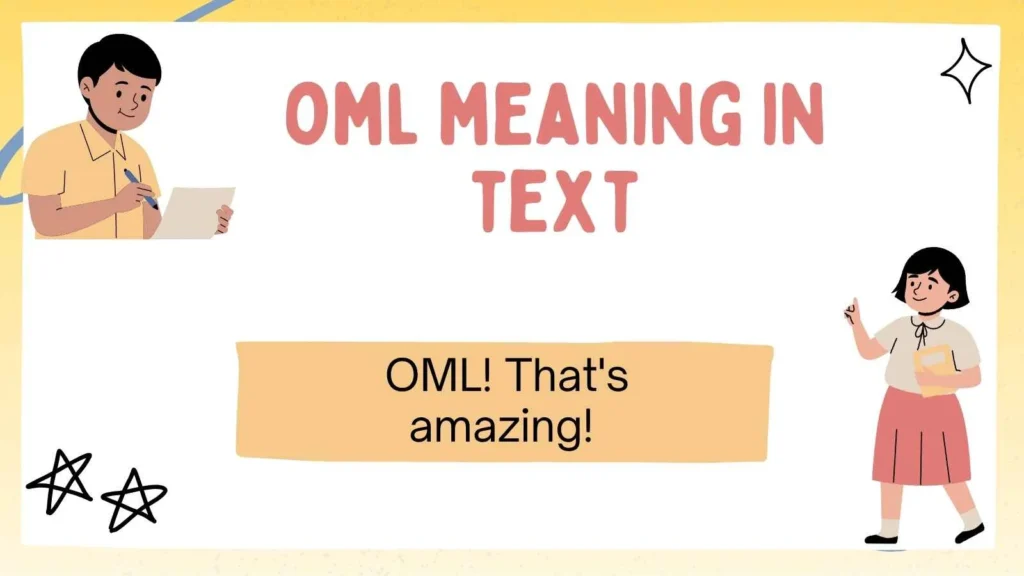
In most conversations, OML stands for “Oh My Lord.” It is an emotional expression people use when they are surprised, excited, shocked, happy, frustrated, or even amused.
Depending on the situation, its meaning can change slightly, but the emotion behind it remains strong.
Understanding OML meaning in text helps you communicate naturally with friends and understand modern online conversations without confusion.
Whether you’re chatting with classmates, replying on social media, or reading comments online, knowing how and when to use this abbreviation makes texting much easier.
## What Does OML Mean in Text? 💬
Quick Answer
OML most commonly means “Oh My Lord.”
People use it to express a sudden emotion or reaction. It works similarly to expressions like:
- OMG (Oh My God)
- Oh wow
- No way
- Seriously?
- I can’t believe it!
Many users prefer OML because it sounds softer and more casual than other emotional expressions.
Featured Snippet Definition
| Term | Meaning |
|---|---|
| OML | Oh My Lord |
| Category | Internet Slang |
| Used In | Texting, Social Media, Gaming, Chats |
| Purpose | Shows surprise, excitement, disbelief, happiness, or frustration |
Think of OML as an emotional shortcut. Instead of typing a complete sentence, users simply write OML to express how they feel instantly.
Example Conversations
Friend: I just won free concert tickets!
You: OML! That’s amazing! 🎉
Friend: Guess what? I passed my driving test.
You: OML!! Congratulations! 🚗
Friend: My phone fell into the swimming pool.
You: OML… that’s terrible. 😭
These examples show that the meaning stays the same while the emotion changes depending on the conversation.
## The Origin of OML 📖
Like many internet abbreviations, OML became popular because people wanted faster ways to communicate online.
Long before smartphones became common, people chatted through instant messaging platforms where typing quickly mattered. Abbreviations such as LOL, BRB, BTW, and OMG became everyday language. Eventually, OML joined this growing list.
The phrase “Oh My Lord” has existed in spoken English for many years. However, shortening it to OML became common during the rise of:
- Online chat rooms
- SMS texting
- Facebook Messenger
- Snapchat
- TikTok
- Discord
- Gaming communities
As younger users adopted internet slang, OML spread across multiple platforms and became part of everyday digital communication.
Today, millions of users recognize OML instantly without needing the full phrase.
Why Did OML Become So Popular?
Several reasons explain its popularity:
It’s short.
It’s easy to type.
*It expresses strong emotions.
It fits almost every conversation.
*It feels natural in casual chats.
Instead of writing:
“Oh my Lord, I can’t believe this happened!”
People simply write:
“OML!!”
The message becomes shorter while keeping the same emotional impact.
## Different Meanings of OML Depending on the Situation 🌍
Although “Oh My Lord” is the standard meaning, the emotion behind OML changes with the conversation.
Here are the most common situations.
1. Surprise 😲
Someone shares unexpected news.
Example
Friend:
“I got promoted today.”
Reply:
“OML! That’s incredible!”
2. Excitement 🎉
People also use OML when something exciting happens.
Example:
“OML! We’re going to Disney next week!”
3. Happiness 😊
Receiving wonderful news often leads to an OML reaction.
Example:
“OML! I’m so happy for you!”
4. Shock 😳
Unexpected situations often trigger OML.
Example:
“OML… Did that really happen?”
5. Frustration 😩
Sometimes people use OML after something goes wrong.
Example:
“OML, my laptop just crashed.”
6. Disbelief 🤯
Example:
“OML… I seriously can’t believe this.”
Emotion Comparison Table
| Situation | Example |
|---|---|
| Surprise | OML! Really? |
| Happiness | OML! That’s awesome! |
| Excitement | OML! Let’s go! |
| Shock | OML… No way! |
| Frustration | OML, today has been terrible. |
| Amazement | OML! You’re so talented! |
This flexibility is one reason why OML remains popular across different age groups.
## How People Use OML in Everyday Text Conversations 📱
Understanding OML meaning in text becomes much easier when you see it in realistic conversations.
Example 1
Sarah:
“I finally got the job!”
Emma:
“OML!! Congratulations! 🎉”
Example 2
Jake:
“I forgot my wallet.”
Ryan:
“OML 😂 That sounds like you.”
Example 3
Emily:
“I met my favorite singer today.”
Sophia:
“OML!! I’m so jealous!”
Example 4
Chris:
“The exam was much easier than expected.”
Alex:
“OML! That’s great news.”
Example 5
Mom:
“Your package arrived.”
Daughter:
“OML! Finally!”
Notice something interesting?
In every example, OML appears naturally at the beginning of the response because it expresses an immediate emotional reaction.
## OML Meaning Across Popular Social Media Platforms 🌐
Although the meaning stays mostly the same, the way people use OML changes slightly across different apps.
Snapchat 👻
On Snapchat, OML often reacts to funny photos, streaks, selfies, or surprising updates.
Example:
“OML 😂 Your dog is adorable!”
Instagram 📷
Instagram users frequently comment:
- OML you’re gorgeous!
- OML this view is beautiful!
- OML I love this outfit!
TikTok 🎵
TikTok comments are full of emotional reactions.
Examples include:
- OML 😂😂
- OML this is hilarious.
- OML I wasn’t expecting that ending.
Discord 🎮
Gamers often type:
“OML we actually won!”
or
“OML that boss fight was impossible.”
Facebook 👍
Friends and family may use OML while reacting to life updates.
Example:
“OML! Congratulations on your new baby!”
Platform Comparison
| Platform | Common Usage |
|---|---|
| Snapchat | Funny reactions |
| TikTok | Entertainment and viral videos |
| Comments on photos and reels | |
| Discord | Gaming reactions |
| Personal updates | |
| Messenger | Daily conversations |
## Real-Life Examples of OML Meaning in Text 💡
Learning through examples is one of the easiest ways to remember internet slang. Here are several realistic situations where OML fits naturally.
School Chat
Emma: “The teacher canceled tomorrow’s test!”
Lily: “OML!! Best news ever!” 🎉
Family Group
Dad: “Dinner is ready.”
Son: “OML! I’m starving.” 🍕
Friends Planning a Trip
Ava: “Our vacation is officially booked.”
Mia: “OML!! I can’t wait!” ✈️
Shopping Conversation
Friend: “Everything is 50% off today.”
Reply: “OML! Let’s go shopping!” 🛍️
Sports Chat
Alex: “Our team won the championship.”
Chris: “OML! That’s amazing!” 🏆
Birthday Surprise
Friend: “Everyone planned a surprise party for you.”
Reply: “OML… I had no idea!” 🎂
Gaming Chat
Player 1: “We defeated the final boss.”
Player 2: “OML! That was intense!” 🎮
Movie Night
Friend: “That plot twist was unbelievable.”
Reply: “OML! I never saw it coming.” 🍿
Why These Examples Matter
One of the biggest reasons people quickly understand OML meaning in text is that the abbreviation almost always appears at the beginning of a response. It instantly tells the reader that an emotional reaction is coming.
Whether someone is happy, surprised, excited, shocked, or disappointed, OML communicates those feelings in just three letters.
When Should You Use OML in Text? 📱
Knowing OML meaning in text is only the first step. Understanding when to use it makes your conversations sound more natural and engaging.
In general, OML works best in casual conversations where emotions play a big role. It quickly shows excitement, surprise, disbelief, happiness, or even frustration without typing a long sentence.
Here are some situations where using OML feels completely natural.
You Can Use OML When:
- 🎉 Someone shares exciting news.
- 😲 You hear something unexpected.
- 😂 A funny video makes you laugh.
- 🤯 You can’t believe what happened.
- 😊 A friend achieves something special.
- 😭 Something disappointing happens.
- 🎁 You receive a surprise.
Example Messages
Friend: “I won a brand-new laptop.”
Reply:
OML! That’s awesome!
Friend: “Guess who is coming to visit?”
Reply:
OML! Tell me!
Friend: “Our flight got delayed again.”
Reply:
OML… that’s frustrating.
Using OML in these situations makes your response feel quick, expressive, and conversational.
## When You Should Avoid Using OML 🚫
Although OML is popular, it isn’t suitable for every conversation.
Professional communication usually requires complete words instead of internet slang.
Avoid Using OML In:
- Business emails
- Job applications
- Academic assignments
- Research papers
- Professional presentations
- Formal customer communication
- Legal documents
Better Alternatives
Instead of:
OML! That’s surprising.
Write:
That is quite surprising.
Instead of:
OML, I appreciate your help.
Write:
Thank you for your assistance.
Choosing the right language shows professionalism and helps others understand your message clearly.
## OML vs OMG: What’s the Difference? 🤔
Many people confuse OML with OMG because both express strong emotions. However, they have slightly different tones.
| Feature | OML | OMG |
|---|---|---|
| Full Form | Oh My Lord | Oh My God |
| Tone | Softer and casual | More common and stronger |
| Used for Surprise | ✅ | ✅ |
| Used for Excitement | ✅ | ✅ |
| Used for Shock | ✅ | ✅ |
| Suitable for Casual Chats | ✅ | ✅ |
| Common on Social Media | ✅ | ✅ |
Example
Friend:
“I got front-row concert tickets!”
Response 1:
OML! That’s incredible!
Response 2:
OMG! That’s incredible!
Both are correct. The choice often depends on personal preference.
Some users simply feel more comfortable writing OML, while others naturally use OMG.
## Common Texting Slang Similar to OML 💬
If you’re learning OML meaning in text, it’s helpful to know other abbreviations that often appear in the same conversations.
| Abbreviation | Meaning |
|---|---|
| OMG | Oh My God |
| LOL | Laugh Out Loud |
| LMAO | Laughing My… Off |
| BRB | Be Right Back |
| BTW | By The Way |
| IDK | I Don’t Know |
| TBH | To Be Honest |
| SMH | Shaking My Head |
| IMO | In My Opinion |
| FR | For Real |
| NGL | Not Gonna Lie |
| IKR | I Know, Right? |
Learning these common abbreviations makes online conversations much easier to follow.
## Common Mistakes People Make with OML ⚠️
Although OML is simple, people sometimes misunderstand or misuse it.
1. Thinking It Has Multiple Official Meanings
The most widely accepted meaning is:
Oh My Lord
While a few niche communities may use OML differently, in everyday texting this is the meaning most people recognize.
2. Using It in Formal Writing
Internet slang belongs in casual conversations, not professional communication.
3. Overusing It
If every message starts with OML, it loses its emotional impact.
Instead, use it only when your reaction is genuine.
4. Misreading the Emotion
Remember that OML reflects the context.
Example:
“OML! That’s amazing!”
expresses excitement.
While:
“OML… that’s awful.”
shows disappointment.
The abbreviation stays the same, but the surrounding words change the emotional meaning.
## Why OML Has Become So Popular 🌍
Modern communication is all about speed. People want to express emotions quickly without typing long sentences.
That’s exactly why OML continues to grow in popularity.
Reasons People Love OML
- ✅ Very short
- ✅ Easy to remember
- ✅ Expresses many emotions
- ✅ Works across different social media platforms
- ✅ Feels friendly and conversational
- ✅ Saves typing time
- ✅ Instantly understood by many internet users
It has become part of today’s digital language, especially among younger audiences who communicate through messaging apps every day.
## Tips for Using OML Naturally ✨
If you want your messages to sound authentic, follow these simple tips.
✔ Match the Emotion
Only use OML when you genuinely feel surprised, excited, shocked, or amazed.
✔ Keep It Casual
OML works best with friends, family, classmates, and online communities.
✔ Add Context
Instead of sending only:
OML
Write something like:
OML! That’s the best news I’ve heard all week!
Adding context makes your response more meaningful.
✔ Use Emojis Sparingly
Examples:
- OML! 😂
- OML! 😍
- OML! 🎉
- OML! 😭
A well-placed emoji can reinforce the emotion without overwhelming the message.
✔ Don’t Force It
Use OML naturally. If the situation doesn’t call for a strong emotional reaction, a simple response may be better.
FAQs:
What does OML mean in text?
OML stands for “Oh My Lord.” It is a popular internet abbreviation used to express surprise, excitement, shock, happiness, or frustration in casual conversations.
Is OML the same as OMG?
Not exactly. Both express emotion, but OML means “Oh My Lord,” while OMG means “Oh My God.” They are often used in similar situations, but some people prefer OML because it feels like a softer expression.
Is OML appropriate for professional communication?
No. OML is best suited for informal conversations with friends, family, or on social media. In professional settings, it’s better to use complete and formal language.
Can OML express both positive and negative emotions?
Yes. Depending on the context, OML can show excitement, happiness, amazement, disappointment, frustration, or disbelief. The words around the abbreviation help clarify the intended emotion.
Where is OML most commonly used?
You’ll often see OML on platforms such as Snapchat, Instagram, TikTok, Discord, Facebook Messenger, and in everyday text messages between friends and family.
Final Thoughts:
Understanding OML meaning in text helps you communicate more confidently in today’s digital world.
While it most commonly stands for “Oh My Lord,” its real purpose is to express genuine emotion in a quick and natural way.
Whether you’re reacting to exciting news, a funny video, an unexpected surprise, or a disappointing situation, OML adds personality and emotion to your messages.
Like many internet abbreviations, it’s most effective when used naturally and in the right context.
By learning its meaning, origin, common uses, and differences from similar slang, you’ll have a better understanding of modern online communication and feel more comfortable joining everyday conversations across texting and social media.

I am a dedicated SEO content writer and language enthusiast with a passion for making modern slang, text abbreviations, and internet terms easy to understand. I carefully research every topic using trusted sources and real-world usage to ensure each explanation is accurate, clear, and up to date. My goal is to help readers quickly understand confusing words, texting acronyms, and online expressions through simple English, practical examples, and easy-to-follow guides. Every article is written with a focus on quality, trustworthiness, and a great reader experience, so you can find reliable answers with confidence.