Last updated on July 18th, 2026 at 01:13 pm
Have you ever opened a message and seen someone simply type “WTW”? 🤔 At first, it can look confusing. Is it a question? A greeting? Or does it stand for something completely different?
If you’re searching for the wtw meaning in text, you’re not alone. Every day, people come across this popular internet abbreviation while chatting with friends, using social media, or sending quick text messages.
Since texting has become faster than ever, short forms like WTW help people communicate in just a few letters.
The good news is that WTW is easy to understand once you know the context.
In most conversations, it simply means someone wants to know what’s happening, what you’re doing, or what the plan is. It can also be used as a friendly way to start a conversation.
What Does WTW Mean in Text? 💬
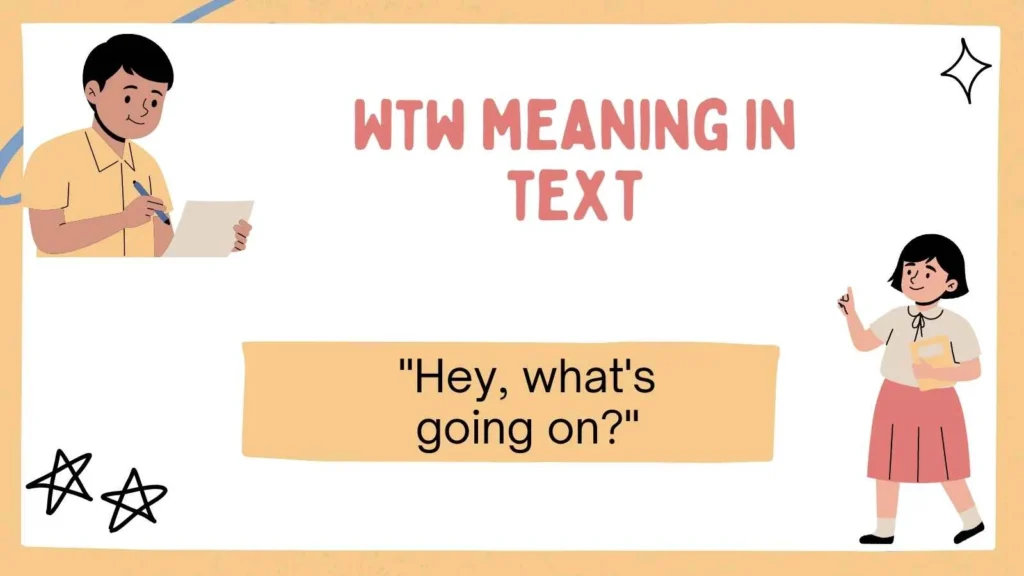
The wtw meaning in text is most commonly “What’s the Word?”
Although that phrase might sound unusual at first, it usually has a very simple meaning.
People use WTW to ask questions like:
- What’s going on?
- What’s up?
- What are you doing?
- What’s the plan?
- Anything happening today?
- Want to hang out?
Instead of typing an entire sentence, someone simply sends WTW.
Quick Definition
| Term | Meaning |
|---|---|
| WTW | What’s the Word? |
| Purpose | Start a conversation |
| Tone | Casual and friendly |
| Common Use | Text messages and social media |
Think of it as another way of saying:
“Hey, what’s going on?”
or
“Any plans today?”
That’s why you’ll often receive a WTW message from friends who want to chat or meet up.
Example Conversations
Friend: WTW?
You: Nothing much. Just watching a movie.
Friend: WTW tonight?
You: I’m free after dinner.
Friend: WTW this weekend?
You: Let’s go hiking.
As you can see, the abbreviation naturally starts a conversation.
Origin of WTW Meaning in Text 🌍
Like many internet abbreviations, WTW became popular because people wanted faster ways to communicate online.
Long before smartphones became common, people chatted in:
- Online forums
- Chat rooms
- Instant messaging apps
- SMS text messages
Since typing took longer on older mobile phones, users shortened common phrases.
Over time, abbreviations such as:
- LOL
- BRB
- IMO
- TBH
- WTW
became part of everyday online language.
Although “What’s the Word?” existed as an informal English phrase for decades, younger internet users transformed it into the simple abbreviation WTW.
Today, millions of people use it every day across different social platforms.
Why Did WTW Become Popular?
There are several reasons.
*✅ It saves time.
✅ It sounds casual.
*✅ It starts conversations naturally.
✅ It feels friendly.
*✅ It’s easy to remember.
Instead of typing:
“Hey, what are you doing today?”
Someone simply writes:
WTW?
The meaning stays almost exactly the same while taking much less effort to type.
How Is WTW Used in Everyday Conversations? 📱
One reason the wtw meaning in text has become so popular is its flexibility.
People don’t use it in only one situation. Instead, it fits many everyday conversations.
For example, someone might use WTW when they want to:
- Start chatting
- Make weekend plans
- Ask if you’re busy
- Invite you somewhere
- Catch up after a long time
- Break the ice
Here are some common situations.
Asking What Someone Is Doing
Alex: WTW?
Emma: Just finished work.
Asking About Plans
Jake: WTW later?
Chris: I’m going to the gym.
Starting a Conversation
Friend: WTW?
You: Not much. How about you?
Checking Availability
Sam: WTW tonight?
Lily: I’m free after 7 PM.
Looking for Something Fun
David: WTW this weekend?
Ryan: Let’s go bowling.
Each example shows that WTW is less about the exact words and more about starting a relaxed conversation.
Different Meanings of WTW Depending on Context 🧠
Although “What’s the Word?” is the most common definition, context always matters.
Sometimes WTW can carry slightly different meanings without changing the overall idea.
Here’s a quick comparison.
| Situation | Meaning |
| Texting a friend | What’s up? |
| Planning a meetup | What’s the plan? |
| Weekend chat | What are you doing? |
| Group conversation | What’s happening? |
| Checking availability | Are you free? |
Notice something interesting?
Every version still revolves around the same basic question:
“What’s going on?”
That’s why understanding the conversation matters more than memorizing one exact definition.
Example 1
WTW after school?
Meaning:
Do you have plans after school?
Example 2
WTW this Friday?
Meaning:
What’s everyone doing on Friday?
Example 3
WTW bro?
Meaning:
What’s up?
Example 4
WTW today?
Meaning:
Anything exciting happening today?
Even though the wording changes slightly, the intention remains friendly and conversational.
Why People Prefer Using WTW Instead of Full Sentences ✨
Modern communication moves quickly.
Whether you’re texting a friend, replying on social media, or chatting in a group, people often prefer short messages over long paragraphs.
That’s one reason the wtw meaning in text has become so common.
Instead of writing:
- “What are you doing?”
- “What’s happening?”
- “Do you have any plans?”
- “Want to hang out later?”
People simply type:
WTW?
Benefits of Using WTW
- 🚀 Saves time while typing.
- 😊 Sounds relaxed and friendly.
- 📱 Fits naturally into quick conversations.
- 💬 Makes starting a chat easy.
- 🎉 Works for many different situations.
Because it’s short, people can send it in just a second, making conversations feel faster and more natural.
When Should You Use WTW?
WTW works best when you’re talking with people you already know, such as:
- Friends
- Classmates
- Family members
- Coworkers (in casual chats)
- Online gaming friends
It is generally not suitable for formal emails, business communication, or professional documents, where complete sentences are more appropriate.
Using WTW in the right setting helps your messages sound natural without losing their meaning.
WTW Meaning on Snapchat, Instagram, TikTok, and Other Social Media 📲
The wtw meaning in text stays almost the same across most social media platforms. However, the way people use it can vary slightly depending on the app and the conversation.
In general, WTW is a casual way to ask someone what they’re doing, what’s happening, or whether they want to chat or make plans.
Let’s look at how it’s commonly used on different platforms.
Snapchat 👻
On Snapchat, WTW usually means:
- What’s up?
- What are you doing?
- Want to start a Snap streak?
- Want to hang out later?
Example:
Friend: WTW?
You: Just got home. You?
Instagram 📸
On Instagram, people often send WTW through Direct Messages (DMs) to start a conversation.
Examples include:
- WTW tonight?
- WTW this weekend?
- WTW after work?
It feels friendly and informal, making it a great conversation starter.
TikTok 🎵
TikTok users often use WTW in:
- Comments
- Captions
- Direct messages
Sometimes it simply means:
“What’s going on?”
Other times it can mean:
“What’s everyone doing?”
or
“Who’s joining?”
Facebook 💙
Although Facebook users tend to write longer messages, younger users still use WTW in Messenger chats.
For example:
WTW later?
This simply asks if someone has plans.
WhatsApp 💬
On WhatsApp, WTW often appears in group chats.
Examples:
- WTW tonight?
- WTW for dinner?
- WTW after class?
The goal is usually to organize plans quickly.
Discord and Gaming Communities 🎮
Gamers frequently use WTW while chatting before playing together.
Examples include:
- WTW tonight?
- WTW for ranked?
- WTW after this match?
It helps teammates quickly decide what to do next.
How to Reply to WTW in Text 💬
One of the biggest questions people have after learning the wtw meaning in text is:
“How should I reply?”
The good news is there isn’t one perfect answer.
Your reply depends on what you’re doing and how the conversation is going.
Casual Replies
- Nothing much.
- Just relaxing.
- Watching TV.
- At home.
- Just finished work.
- Doing homework.
- About to eat.
- Not much. You?
- Just chilling.
- Taking it easy.
If You’re Busy
You can reply honestly.
Examples:
- Working right now.
- Busy today.
- In class.
- Running errands.
- I’ll text you later.
- Finishing a project.
- Can’t talk at the moment.
If You Want to Hang Out
Sometimes WTW is really asking whether you’re free.
Good replies include:
- I’m free!
- Let’s meet up.
- Sounds good.
- I’m down.
- Sure, what do you have in mind?
- Let’s grab coffee.
- Want to go out?
- I’m available after work.
- Let’s do it.
Funny Replies 😂
If you’re joking with friends, you can be playful.
Examples:
- Surviving Monday. 😅
- Waiting for pizza.
- Looking for adventure.
- Living my best life.
- Trying not to procrastinate.
- Hunting for snacks.
- Avoiding responsibilities.
- Same old story.
A little humor makes conversations more enjoyable.
Real-Life Examples of WTW in Conversations 🗨️
Seeing WTW used naturally is one of the easiest ways to understand it.
Here are several realistic conversations.
Example 1
Alex: WTW?
Ben: Just watching Netflix.
Example 2
Emma: WTW tonight?
Olivia: Let’s grab dinner.
Example 3
Jake: WTW this weekend?
Chris: Thinking about going hiking.
Example 4
Sara: WTW?
Emily: Nothing much. How are you?
Example 5
David: WTW after work?
Ryan: I’m free after six.
Example 6
Anna: WTW tomorrow?
Lisa: I’m visiting my grandparents.
Example 7
Mark: WTW bro?
John: Just got back from the gym.
Example 8
Sophia: WTW today?
Grace: Shopping with friends.
These examples show that WTW naturally fits into many everyday conversations.
WTW vs WYD vs WSP vs SUP: What’s the Difference? 🔍
Many texting abbreviations seem similar, but they aren’t always used the same way.
Here’s a helpful comparison.
| Abbreviation | Full Form | Meaning | Best Used For |
|---|---|---|---|
| WTW | What’s the Word? | What’s happening? | Starting conversations |
| WYD | What You Doing? | Asking what someone is doing now | Checking current activity |
| WSP | What’s Up? | Casual greeting | Saying hello |
| SUP | What’s Up? | Very informal greeting | Friendly chats |
WTW
Focuses on plans, activities, or starting a conversation.
Example:
WTW tonight?
WYD
Usually asks about the person’s current activity.
Example:
WYD right now?
WSP
Works like saying hello.
Example:
WSP!
SUP
An even shorter version of “What’s up?”
Example:
Sup?
Although these abbreviations overlap, each has a slightly different purpose.
Common Mistakes People Make About WTW ⚠️
Since internet slang changes quickly, people sometimes misunderstand WTW.
Here are a few common mistakes.
Thinking It Has Only One Meaning
While “What’s the Word?” is the most common meaning, context always matters.
The same abbreviation can simply mean:
- What’s up?
- What’s happening?
- What’s the plan?
Using It in Professional Settings
WTW is informal.
Avoid using it in:
- Business emails
- Job applications
- Academic papers
- Official reports
Complete sentences sound much more professional.
Assuming Everyone Knows It
Not everyone understands internet slang.
If you’re chatting with older relatives or someone unfamiliar with texting abbreviations, writing the full sentence may be clearer.
Overusing Abbreviations
Using too many abbreviations can make messages confusing.
Instead of writing:
“WSP WTW WYD LOL”
Try using complete sentences whenever clarity is important.
Balance makes communication easier.
When Should You Use WTW? ✅
The wtw meaning in text makes the most sense in relaxed conversations.
Here are situations where it’s a great choice.
Perfect Times to Use WTW
- 😊 Talking with friends
- 🎉 Planning weekend activities
- 📱 Sending quick texts
- 💬 Starting a conversation
- 🎮 Chatting while gaming
- 📸 Messaging on social media
Times to Avoid WTW
Avoid using it when communicating professionally.
Examples include:
- Job interviews
- Business emails
- Customer service messages
- School assignments
- Formal presentations
- Professional networking
Choosing the right language for the situation helps you communicate clearly and respectfully.
By understanding when to use WTW, you’ll sound natural while avoiding misunderstandings.
Similar Texting Slang You Should Know 📝
Now that you understand the wtw meaning in text, it’s helpful to learn a few other common abbreviations. Knowing these terms can make texting and online conversations much easier.
Here’s a quick reference table.
| Abbreviation | Meaning | Example |
|---|---|---|
| LOL | Laugh Out Loud | LOL, that’s funny! |
| BRB | Be Right Back | BRB, I need a drink. |
| TBH | To Be Honest | TBH, I enjoyed the movie. |
| IMO | In My Opinion | IMO, this is the best option. |
| WYD | What You Doing? | WYD after school? |
| WSP | What’s Up? | WSP, everyone? |
| IDK | I Don’t Know | IDK what happened. |
| SMH | Shaking My Head | SMH, that’s unbelievable. |
| TTYL | Talk To You Later | Gotta go, TTYL! |
| FYI | For Your Information | FYI, the meeting starts at 10. |
Learning these abbreviations helps you understand modern conversations without feeling left out.
Tips for Using WTW Naturally 💡
Although WTW is simple, using it naturally makes your conversations smoother and more engaging.
Here are a few practical tips.
Keep It Casual
WTW is designed for relaxed conversations.
Use it when texting:
- Friends
- Family
- Classmates
- Close coworkers
- Gaming friends
Match the Other Person’s Style
If someone often uses abbreviations, replying with WTW feels natural.
If they usually write complete sentences, consider doing the same.
Matching their communication style creates a better conversation.
Add Context When Needed
Sometimes sending only WTW? can feel too short.
Instead, try:
- WTW tonight?
- WTW this weekend?
- WTW after class?
- WTW later today?
Adding context makes your question clearer.
Be Friendly
A small emoji can make your message feel warmer.
Examples:
- WTW? 😊
- WTW tonight? 🎉
- WTW this weekend? 😎
Simple additions like these help your messages sound more inviting.
Quick Recap: WTW Meaning at a Glance 📋
If you’re in a hurry, here’s a quick summary of everything you’ve learned.
| Question | Answer |
|---|---|
| What does WTW mean? | What’s the Word? |
| Most common meaning | What’s up? |
| Used in | Text messages and social media |
| Tone | Casual and friendly |
| Can it mean “What’s the plan?” | Yes |
| Is it formal? | No |
| Best for | Friends and informal conversations |
Remember, the exact meaning depends on the conversation, but it almost always relates to asking what someone is doing or what’s happening.
Why Understanding Texting Slang Matters 🌐
Texting abbreviations are now part of everyday communication.
Whether you’re chatting with friends, messaging classmates, or talking with family, understanding common slang helps you communicate more confidently.
Benefits include:
- ✅ Faster conversations
- ✅ Better understanding of online messages
- ✅ Less confusion when reading chats
- ✅ More natural communication
- ✅ Greater confidence on social media
As digital communication continues to grow, learning terms like WTW can make everyday conversations easier and more enjoyable.
WTW Meaning on Snapchat
- 🚀 Discover why WTW is one of the most common Snapchat messages today.
- 💬 Learn what WTW usually means when it appears in a new Snap.
- 👀 See how friends use WTW to start quick and casual conversations.
- 📱 Find out when WTW means Whats the Word instead of something else.
- 🔥 Explore real Snapchat chat examples that make the meaning crystal clear.
- 😊 Understand the friendly tone behind WTW in everyday snaps.
- ⚡ Know the best ways to reply without sounding awkward.
- 🎯 Spot the difference between playful, social, and casual uses of WTW.
- 🤝 See why WTW is often used to make plans or check in with friends.
- 💡 Avoid common misunderstandings by learning the right context.
- 🌟 Discover when WTW can lead to longer and more engaging conversations.
- ✅ Use WTW naturally on Snapchat like a confident, regular user.
WTW Meaning in Text from a Guy
- 👨 Understand what a guy usually means when he texts WTW.
- 💬 Learn whether WTW is simply friendly or shows genuine interest.
- ❤️ Discover the subtle clues hidden behind a casual WTW message.
- 🤔 Find out if he is trying to start a conversation or make plans.
- 📅 See how WTW is often used to ask what you are doing today.
- 😄 Explore real texting examples that reveal his true intention.
- 🔍 Learn how context changes the meaning of WTW completely.
- ⚡ Know the smartest ways to respond and keep the chat flowing.
- 📱 Spot signs that WTW is just casual versus more personal.
- 🌟 Avoid overthinking by understanding the most common meanings.
- 🤝 See why many guys use WTW as an easy conversation starter.
- ✅ Reply with confidence using simple, natural responses.
Best WTW Meaning in Text from a Girl
- 👩 Discover what a girl often means when she sends WTW in a text.
- 💕 Learn whether WTW can be a friendly check-in or a sign of interest.
- 😊 See how girls use WTW to keep conversations light and fun.
- 💬 Understand the different meanings based on the chat and relationship.
- 📅 Find out when WTW is simply asking about your plans.
- 🌸 Explore everyday examples that make the meaning easy to understand.
- 🤔 Learn how tone and timing can change the message completely.
- ✨ Discover thoughtful replies that help keep the conversation going.
- 📱 Avoid common mistakes when interpreting a girl’s WTW text.
- 🎯 Recognize when WTW is playful, curious, or simply casual.
- 🤝 See why WTW is a popular way to reconnect after a quiet chat.
- ✅ Respond naturally and confidently in any texting situation.
FAQs:
What does WTW mean in text?
The wtw meaning in text is usually “What’s the Word?” It is commonly used to ask “What’s up?”, “What’s happening?”, or “What are you doing?”
Is WTW the same as “What’s up”?
In many conversations, yes. Both expressions are casual greetings used to start a conversation or ask how someone is doing.
Can WTW have different meanings?
Yes. Depending on the situation, WTW can mean:
- What’s up?
- What’s happening?
- What’s the plan?
- What are you doing?
- Are you free?
The context of the conversation helps determine the intended meaning.
Is WTW considered slang?
Yes. WTW is internet slang and a texting abbreviation. It is commonly used in casual conversations but is generally not appropriate for formal communication.
Should I use WTW in professional messages?
No. In professional settings, it’s better to use complete sentences such as:
- “How are you?”
- “Do you have any plans today?”
- “Are you available to meet?”
These expressions sound more professional and respectful.
Final Thoughts:
Understanding the wtw meaning in text makes modern conversations much easier. While the abbreviation stands for “What’s the Word?”, its purpose goes beyond the words themselves.
It’s a quick, friendly way to ask what’s happening, what someone is doing, or whether they have plans.
Whether you’re texting a friend, chatting on Snapchat, sending an Instagram message, or talking in a gaming group, WTW helps start conversations naturally.
Like many internet abbreviations, its exact meaning depends on the context, but it almost always carries a casual and welcoming tone.
As online communication continues to evolve, becoming familiar with popular slang terms like WTW will help you understand messages more easily and communicate with greater confidence.

I am a dedicated SEO content writer and language enthusiast with a passion for making modern slang, text abbreviations, and internet terms easy to understand. I carefully research every topic using trusted sources and real-world usage to ensure each explanation is accurate, clear, and up to date. My goal is to help readers quickly understand confusing words, texting acronyms, and online expressions through simple English, practical examples, and easy-to-follow guides. Every article is written with a focus on quality, trustworthiness, and a great reader experience, so you can find reliable answers with confidence.